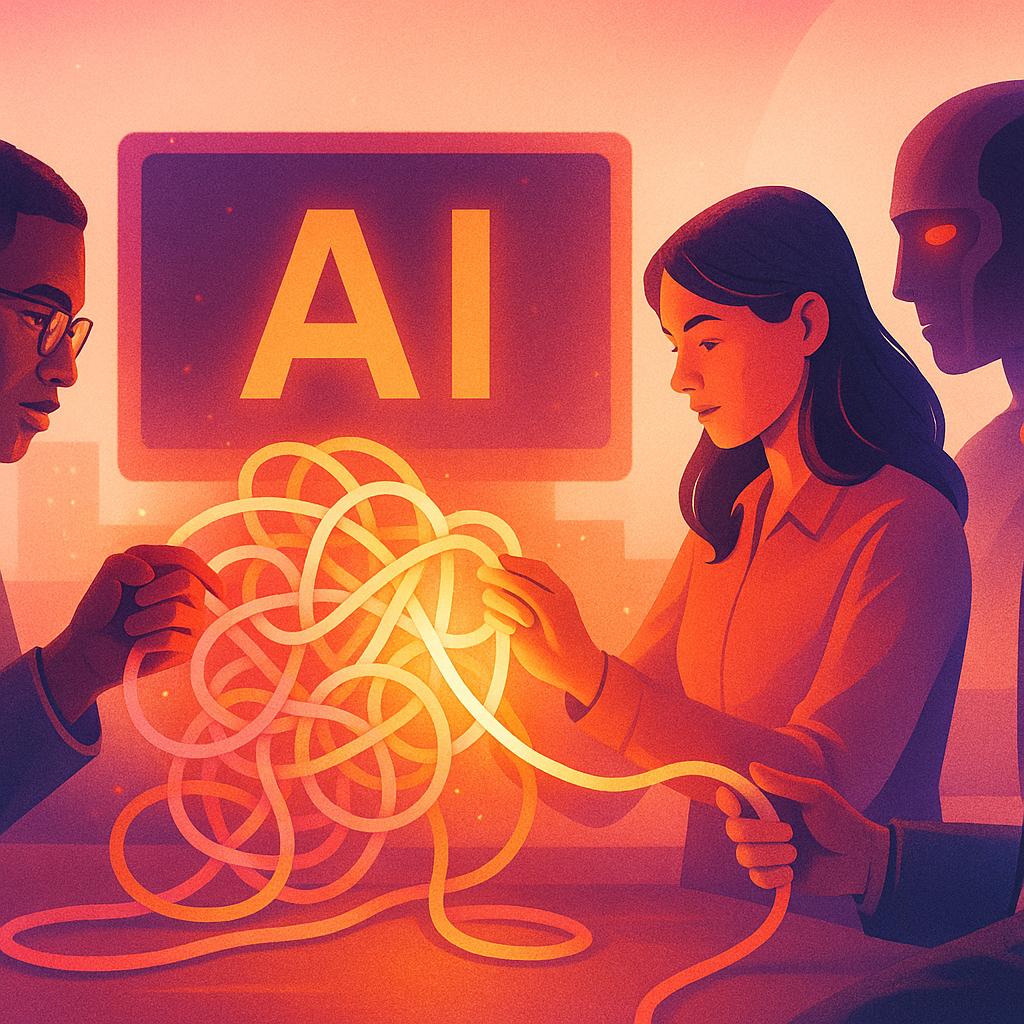



Every day brings a fresh wave of tech news; CEO moves, new startup unicorns, the rise and fall of technology giants. But beyond the headlines, what we need to do is connect the dots, decode these headlines, and understand what they mean for the future of the Artificial Intelligence (AI) industry.
There’s no better starting point than talking about Kai-Fu Lee, arguably China’s most prominent tech figure. He has established a reputation for turning concepts into unicorns as seen with his artificial intelligence startup, 01.AI. Yet, while he enjoys unprecedented success in the East, the journey across the Pacific has been riddled with headwinds.
US investors, as it turns out, have expressed reservations about backing Rhymes AI, another AI startup affiliated with Lee. The startup, developing English-centric AI models and apps, has struggled in its fundraising endeavor. The primary cause for hesitation lies in Rhymes AI’s association with 01.AI, which, despite being one of China’s leading AI developers, raises questions among investors due to the differences in ethical and operational norms between the two superpowers.
This offers a fascinating insight into the role of geopolitics in shaping the future of AI. The technology world is increasingly becoming divided along national lines with the US and China
representing two conflicting visions.
On the opposite end of the spectrum, there are heart-wrenching reports about the popular startup, Forward, that shook the healthcare tech segment with its innovative ‘Doctor in Box’ healthcare modules, deciding to shut down. This ambitious endeavor aimed at redefining patient care by leveraging advanced AI mechanisms and connected healthcare modules.
However, despite the promising start and the transformative idea, it fell prey to operational and funding challenges. While it’s
disheartening to see innovative initiatives like Forward move towards an untimely end, it also indicates that achieving longevity in the tech world requires more than just an innovative idea. It drives home the fact that success in the therapy care sector relies on customer trust, scaled operations, and sustainable funding models. While AI holds immense potential, otherwise promising startups may falter in the absence of sustainable business models.
Taking a closer look at these events, we can see a pattern that holds profound implications for the AI industry’s future. It’s clear that the landscape is rapidly changing, influenced by a plethora of factors including geopolitical considerations, market dynamics, and
sustainable business modeling.
While the magic of AI opens avenues for improvement across sectors, true success will not be determined solely by technological
innovation. Surviving and thriving in the AI era will require strategic navigation through geo-politics, regulatory landscapes, market acceptance, and operational sustainability.
Rather than succumbing to the hype, it’s time we take heed of what these headlines are truly telling us. The future of AI, while promising, is fraught with challenges and paradigms that need to be acknowledged, addressed, and navigated. Connecting these dots gives us a more realistic, holistic perspective of the future – one that balances the potential of AI with the realities of the business world. This is vital for anyone looking to succeed in the exciting, yet unpredictable world of AI.