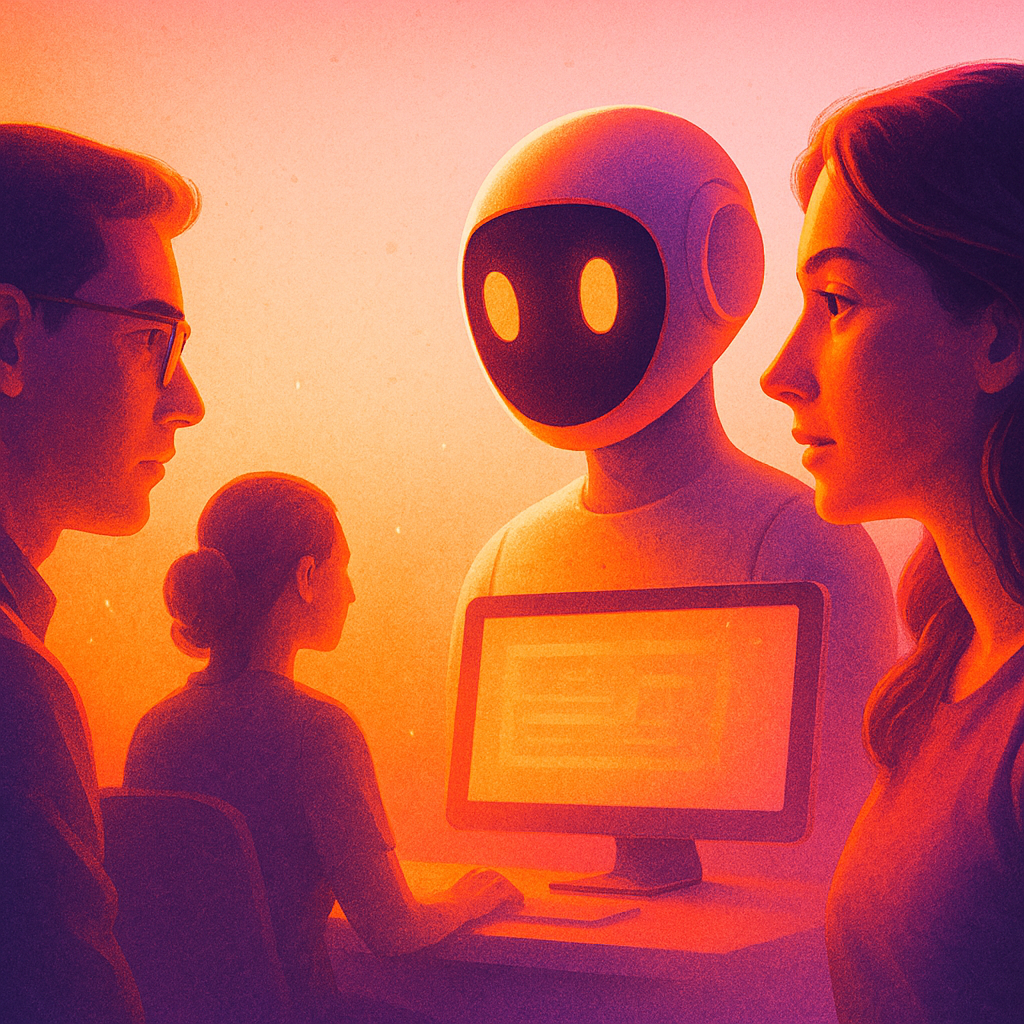


Hello there, AI enthusiasts and technophiles! Picture this for a moment: your child is having a heart-to-heart with an AI-powered chatbot, forming emotional attachments, trusting it like a loyal buddy. Sounds a tad futuristic, right? However, the folks over in sunny California don’t think it’s all smooth sailing, with a new bill (SB 243) looking to enact guidelines to ensure AI chatbots don’t masquerade as humans to our little ones.
Why such a fuss, you may ask? Well, here’s the hard pill to swallow: Extensive research from the University of Cambridge suggests that children may bear an unseemly level of trust toward AI, even forming deep-rooted emotional bonds with chatbot entities. Sounds kind of adorable? Think again.
The legislation, proposed by Senator Steve Padilla, holds a firm stance that AI chatbots interacting with minors are obligated to remind them intermittently that they are not human but bunches of code designed to mimic human interaction. A simple requisite, yet it addresses a pressing concern.
But it doesn’t just end there. The bill further aims to deny companies the luxury of incentivizing children to remain hooked to their screens. Moreover, it creates an obligation for them to report instances of suicidal tendencies in minors. Yes, it goes deeper than just ensuring AI fairness. It’s about the quality and impact of the interactions kids are having with AI.
Just to sink it in further, consider this: In an experimental trial, Snapchat’s AI was tested by researchers, where it hypothetically advised a 13-year-old on how to secretly jet off with a 30-year-old. Concerned about the advice our kids are being sold? The answer seems pretty clear.
Moreover, an alarming incident last year saw a 14-year-old tragically ending his own life after developing an emotional bond with a chatbot on Character.AI. The mournful event led to a lawsuit filed by his grieving parents. Quite a bitter reality check, isn’t it?
A counterpoint does exist, suggesting that AI can act as a “safe space” for children when they feel uncomfortable opening up to parents or friends. But the existing potential for harm far outweighs the perceived benefits. The nagging worry is that children may begin to rely more on bots than on forming real human connections.
But what if we addressed the underlying issue? Why are children turning to bots in the first place? Overcrowded classrooms, limited afterschool programs, and a shortage of child psychologists have created a leeway for AI to fill. Therefore, while regulating AI is a step forward, perhaps more attention should be given to providing our kids with supportive community systems that facilitate healthier interaction with actual humans. That’s food for thought.
Now, over to something from The Automated. We are thrilled to announce The Autonomous Agency – the next level of evolution, with the same promise to deliver AI-driven insights that can help grow personal brands or businesses. By referring our services, you unlock perks including Loom videos on the creation of The Automated, a whopping 50% discount on your first month with The Autonomous Agency, and even a 30-minute one-on-one call on system implementation for your brand. Sharing is winning!
As we delve deeper into the fascinating world of AI, Snapchat is bringing lightning-fast AI text-to-image generation to your phone with Snap’s diffusion model. It generates high-res images in a mind-blowing 1.4 seconds on an iPhone 16 Pro Max. In-house AI models are cutting costs while maintaining high creativity. AI evolution is real, folks.
In addition, here’s some more AI-centric buzz around the block: how to utilize AI prompt chains for better results, Google Gemini AI extensions for your phone, and many more.
So, how’s all this relevant to consumers and large brands? Simple. The rapid advancements we’re witnessing in AI have massive potential to reshape how consumers receive service and interact with brands, while simultaneously offering unique opportunities to automate processes, personalize experiences, and maximize efficiency. But it’s more than just tech – it’s about balancing innovation with ethical
considerations and genuine benefit for our users, particularly the more vulnerable ones.
So, let’s make sure we’re moving forward with a keen eye on the broader implications for consumers. We can wield this tremendous power to build an engagingly interactive and efficient future, but let’s not forget to keep the ‘human’ in human interaction.
Until next time, keep exploring!