


In the ever-evolving landscape of artificial intelligence, dust never seems to settle – it just gets reshuffled into newer, more
sophisticated shapes. Intriguing headlines, like the recent
breakthrough with Google settling its antitrust litigation with a colossal $500 million, are just the tip of the iceberg. The real spectacle unfolds when we delve into the pioneering entrepreneurial ventures taking centre stage.
First off, let’s talk about Axiom. This budding startup is the brainchild of Carina Hong, a not-so-ordinary PhD student at Stanford University who seems to be speaking the language of the future. Her vision? To use AI as a catalyst to solve complex mathematical problems, pioneering a sophisticated blend of math and AI that could have far-reaching implications in every industry.
Imagine the potential we’re looking at here! Axiom aims to serve customers like hedge funds and quantitative traders, individuals who need quick and accurate solutions to multifaceted math quandaries, integral for future projections and market analysis. In the business world, time is indeed money, and Hong’s creation could be the key to unlocking a treasure chest of efficiency and precision.
And it’s not just the finance industry that stands to benefit. Think about the potential in sectors like logistics, healthcare,
environmental science, or engineering where complex calculations form the backbone of operations. Math-solving AI could be the key that opens up the door to unparalleled advancements and technological progress.
Speaking of technological progress, let’s pivot our attention to the tech giant we all know and love – Google. This household name has dipped its toes into every digital pool imaginable, but their recent plunge into the realm of AI takes things to a whole new level. Their latest unveiling? An AI model capable of competing in the
International Math Olympiad, even solving combinatorics problems with the flair of a gold medalist.
And while we’re still absorbing the enormity of that, Google is also settling hefty fines concerning antitrust violations. This just goes to show that compliance with current legal and ethical standards is as important as the innovations themselves. After all, what good is a groundbreaking invention if it fails to respect the very society it’s meant to serve?
Antitrust laws are put in place to ensure a spirit of fair
competition. Google’s enormous $500 million commitment is more than just a payout; it’s a promise—a pledge to uphold those ethical standards and ensure that technological advancements coexist symbiotically with societal norms and ethical guidelines.
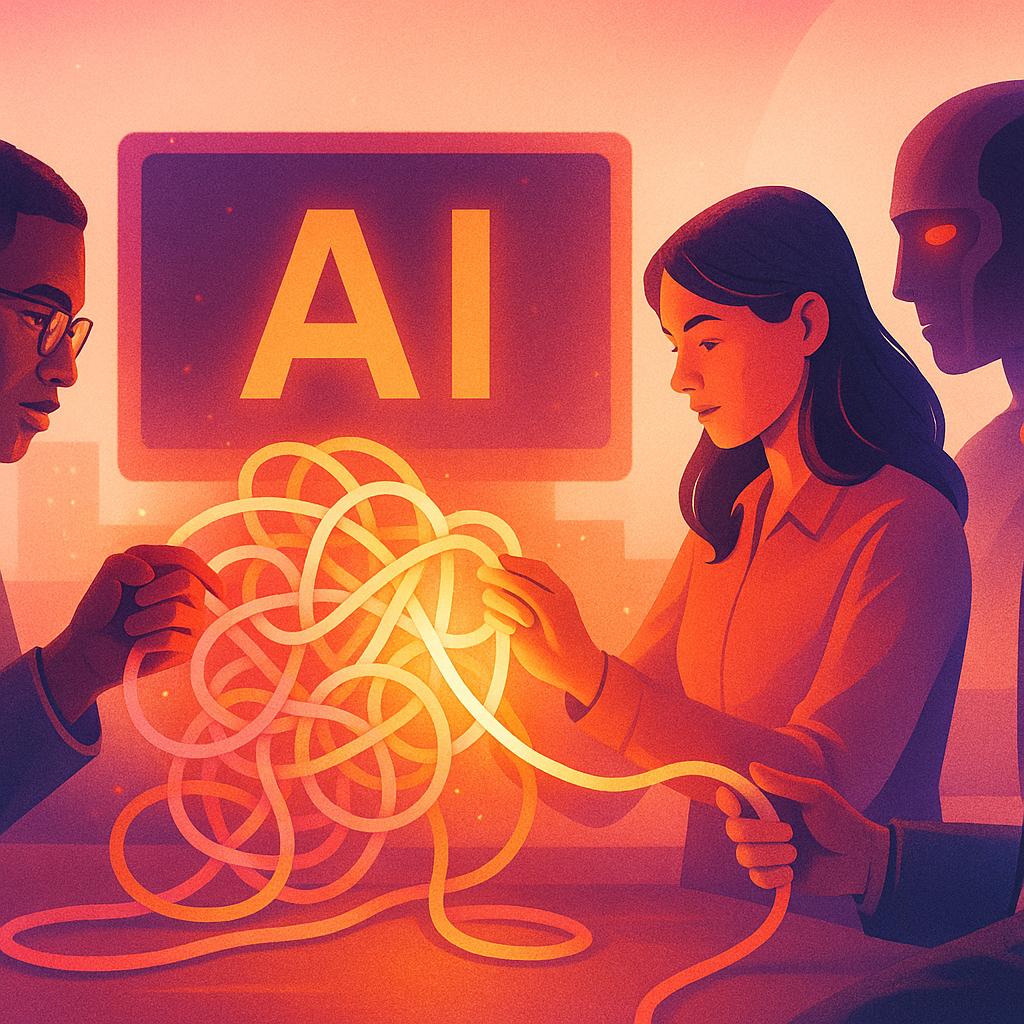
In the end, the thread that connects these narratives is the very fabric of innovation and compliance. The rapid proliferation of AI in every corner of society from mathematical problem-solving to multimillion dollar litigation settlements is a sign of the times, forecasting a future where AI isn’t just an asset but a necessity.
As we peer through the looking glass of technological advancements, we can rest assured that AI’s potential is limitless – as long as we remember to ground these developments in moral and ethical standards, without which our ‘automated’ future could risk losing its ‘human’ touch. AI is not an alternative to human ingenuity, but an amplifier of it. Let’s remember to develop technology that doesn’t replace us, but empowers us to be better versions of ourselves.