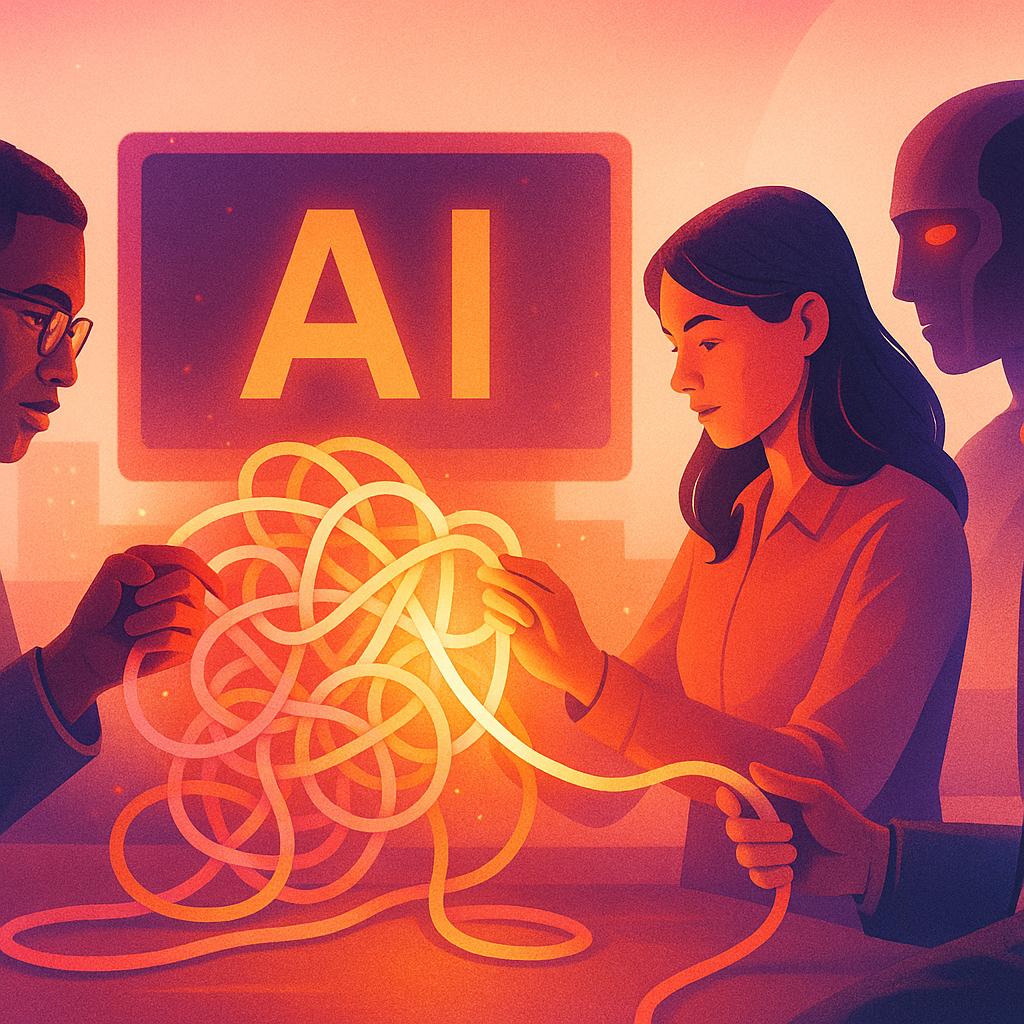



Artificial Intelligence (AI) is a buzz-word floating around the tech and innovation world for quite some time now. Every day, headlines like “Reflection AI Seeks $1 Billion to Compete with Meta and DeepSeek in Open Source AI” continue to astound us. As the reality of AI proliferates worldwide, it creates incredible opportunities for a wide range of industries – from healthcare to education, from marketing to transportation, and everything in between.
However, amid the noise and hype surrounding AI, it’s sometimes easy to forget about the heart of this technology – a desire for better, more efficient solutions to complex problems that cannot be solved with existing tools and systems alone. This drive to break new ground and redefine possibilities is what truly defines the future of AI.
One company keen on doing just that is Reflection AI. Recently making headlines, the AI giant is reportedly in talks to raise more than $1 billion, geared to take on industry heavyweights Meta (formerly Facebook) and DeepSeek in developing open-source AI. But what does this signify, and why does it matter?
For starters, open-source AI is key to driving innovative
technologies. Open-source codes are accessible to all, allowing developers worldwide to contribute, thus accelerating the pace of innovation and technological advancement. AI, in the hands of many, can evolve faster and become more efficient.
This democratization also means the AI developed can be adapted to various needs across industries. Think AI transforming the healthcare industry by enabling accurate disease diagnosis, revolutionizing education with personalized learning, driving more efficient operations in industries like transportation and logistics, or even creating seamless customer experiences in retail. The possibilities are limitless when you provide creative minds with access to powerful tools.
Reflection AI aiming to raise $1 billion fuels the open-source AI movement and signifies the faith investors and the tech world place in this technology’s potential. But it goes beyond that. It shows how AI establishments are seeking to propel technology into spaces
unexplored, to create platforms that encourage broad participation and communication.
Here’s another critical angle to look at: Competing with giants like Meta and DeepSeek means that Reflection AI is not only raising the bar but essentially redefining it. This competition stimulates relentless innovation, pushing the boundaries in the AI sphere. The repercussions of this outpouring of innovation are then felt across businesses and industries, creating positive ripple effects through enhanced technology and better service delivery.
Yet, it’s essential to remember that while AI has the potential to revolutionize our world, its implementation should be approached with care. Thoughtful integration is the key. Like any tool, it has the scope to either make or break, depending on how it’s used. To put it plainly, while AI undoubtedly brings a lot to the table, so too must we bring a careful, considered approach to the plate.
There is no denying that Reflection AI’s headline doesn’t exist in isolation. Each news bite, each development we hear about AI, every investor’s renewed interest, is a part of a larger narrative — one that brings us closer to a technologically advanced future. But the undercurrent that often gets lost among all these buzzwords is the human element. Regardless of its technological advancement, AI’s goal remains making life simpler, better, and more efficient for humans.
Navigating the future in a world increasingly dependent on AI requires understanding its intricacies, implications and the opportunities it presents. With industry players like Reflection AI, Meta, and DeepSeek at the helm, the future of open-source AI seems not just promising but potential game-changing for the myriad sectors touched by this technology’s expansive reach. But ultimately, remember that AI serves as a tool, a means to an end, and not the end itself. Its best use lies in leveraging its potential to improve human lives and solve complex problems more efficiently than ever before.
So, as coveted billion-dollar funding rounds and corporate juggernauts battle it out in the AI sector, let’s not lose sight of the human factor. As we traverse the era of AI, let’s remember to mould it to serve humankind’s best interests and not forget the human touch in the pursuit of technological progress. After all, the ideal synergy that we need to strive for is not just AI with advanced tech but AI with a human touch.