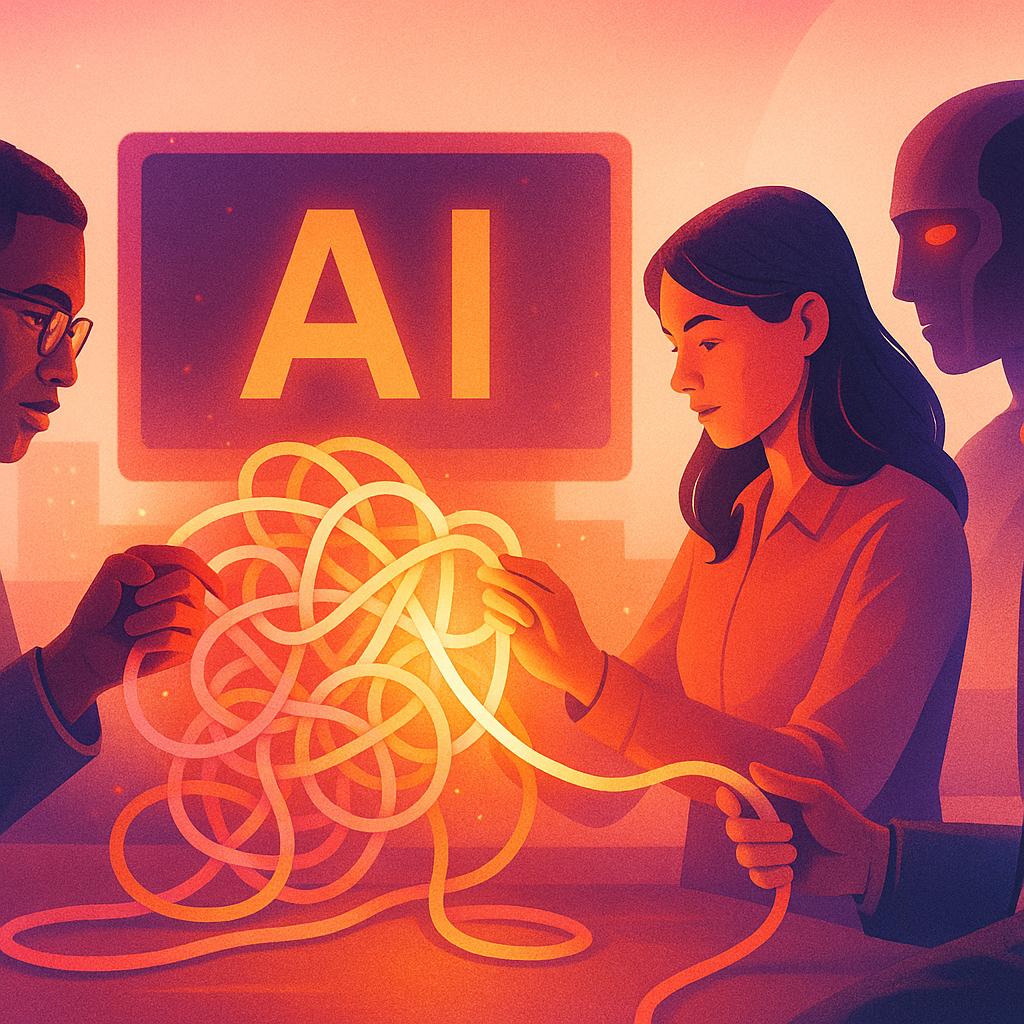



In a world of accelerating technological change, it’s no surprise that we’re seeing a host of exciting advances, many of which are rooted in the rapidly evolving domain of artificial intelligence (AI). The journey towards mastering AI is far from being a smooth sail, yet companies remain undeterred in their quest. Take OpenAI, for instance. With its ambitious mission to ensure artificial general intelligence (AGI) benefits all of humanity, the company has endured a rocky path towards developing their latest generation language model, GPT-5.
The GPT series, if you’re not familiar, stands for “Generative Pretrained Transformer”. From the first iteration, GPT-1, released in 2018, now to its forthcoming evolution, GPT-5, OpenAI has continuously proven its commitment to staying at the forefront of AI development, despite the challenges along the way.
Yet, AI innovation isn’t merely a history lesson, confined to the siloed domain of high tech. These advancements have far-reaching implications, woven into the fabric of everyday life, impacting consumer goods and gradually reshaping industries.
A surprising example emerged recently when President Trump imposed a 100% import tariff on semiconductors. While this caused a kerfuffle in various industries reliant on older chips (think home appliances, automobiles, consumer electronics, and industrial tools), the advanced chips deployed for artificial intelligence dodged those bullets.
Why, you wonder? Trump’s tariff stipulated that companies “building in the United States” would not be subjected. It meant that major players in the global chip manufacturing industry, such as Taiwan
Semiconductor Manufacturing Co. (TSMC), and South Korean giants Samsung Electronics and SK Hynix, all of whom have facilities in the U.S, didn’t feel the sting of the tariff hike. Notably, TSMC, the world’s largest chip maker, manufactures Nvidia’s AI chips – the lifeblood of AI’s growing capacities.
This example serves to underline that AI’s reach extends beyond just labs and software. It is integral to global trade, international relations, and government policies.
Another important thread to pull at is the emergence of cognition in companies such as Cognition and Windsurf. They’re traversing unchartered territories, offering buyouts to newly acquired staff as they navigate merger waters and explore innovative ways of
capitalizing AI’s muscle in the corporate domain.
Similarly, OpenAI’s development of ‘Universal Verifiers’ showcases a novel approach to ensuring the safety of AI. If you find yourself pondering on the nuts and bolts of what this implies, suffice to say, these verifiers set a rigorous benchmark to test and validate the reliability of AI outcomes. It’s akin to having a fail-safe, a trusted gatekeeper ensuring that unchecked AI does not wreak havoc or cause unintended consequences — a testament to the importance placed on accountability in the AI-verse.
In the realm of social media, Meta (formerly Facebook) too, has its fishing lines in the AI waters, on the hunt for lucrative AI video deals that promise to redefine how users consume media content.
Drawing all these threads together, it’s evident that the AI landscape is robust, diverse, and deeply interwoven with the global technology ecosystem. It’s at once a disruptor and a catalyst for innovation. As we continue to navigate this path, filled with both promise and challenges, a keen eye and an open mind remain our best tools for decoding the future of AI. Let’s keep this journey exciting!