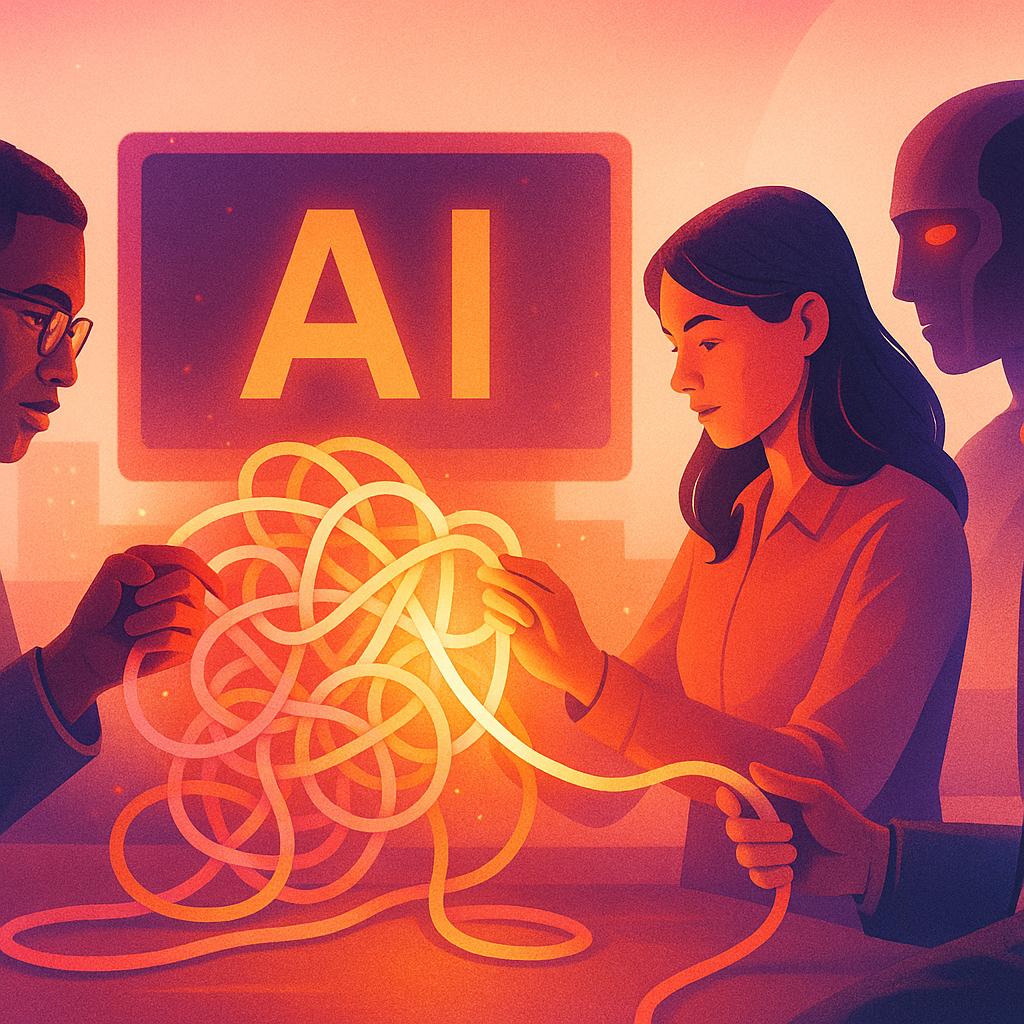



Artificial Intelligence, or AI, is no longer an abstract concept confined within the realm of futuristic novels or the big screen. Today, AI is buzzing through every industry, transforming businesses both on the front line and behind the scenes. One of the most striking developments in the AI industry is the boom of AI model improvement companies – the gatekeepers of data translation and refinement. This includes companies like Invisible Technologies, which have become the heroic sidekicks to the AI superstars.
Now, you may wonder, why such an analogy? Well, these companies function admirably behind the scenes, to refine and boost the quality of AI models developed by industry leaders such as Google and OpenAI. They hire an army of contractors to rate the responses of these models and provide examples of solved coding or math problems. This ultimately improves the AI’s performance, creating smarter, more interactive models that better serve the world of business and technology.
Invisible Technologies, a San Francisco-based company, is a prime example of such firms. In the past year, their revenue jumped from nearly $60 million to an impressive $134 million. Their customers? None other than AI development titans like Amazon Web Services, Microsoft, and Cohere. Now, that’s the kind of growth we’re talking about!
This begs the question: what’s driving this development? The answer lies in the creation of reasoning models – the type of AI designed to crack multifaceted, multi-step problems. The more complex the problem, the more intricate the AI model needs to be. To develop such models, companies like Invisible Technologies provide detailed
explanations—chain of thought data—of each step needed to solve a problem. For instance, if you need to book a hotel room, these AI models can guide you through every step, making your journey feel invisible and seamless!
But don’t get it wrong – these AI models aren’t just about arriving at the right solution. They also need to execute these steps correctly. For example, if the AI model helps you navigate a hotel’s website and assists with entering your loyalty number, it’s treading into the realm of ‘agents’. These AI ‘agents’, powered by data fed from human data labelers, take the digital experience to new heights.
This seamless execution brings us to another crucial aspect – specificity. As the AI ecosystem evolves, there’s an increasing demand to improve large language models in distinct domains such as coding, mathematics, chemistry, pharmaceuticals, and even specific languages. To meet these needs, companies like Invisible Technologies are roping in experts with specialized knowledge.
With all these advancements, we cannot ignore the role of humans in the AI loop. As impressive as AI models may be, they still require human intervention to tweak and fine-tune them before public launch. This reliance on manual labor might put pressure on gross margins, but it also underlines the inherent balance between human know-how and AI.
Another intriguing aspect is the consultancy services offered by these AI model improvement companies. Invisible Technologies, for instance, assists other businesses in understanding how to leverage AI to automate parts of their operations. The ability to extend expertise beyond core services indicates the versatility and comprehensive value such firms bring to the table.
So, where does the future lie? Companies like Invisible Technologies, Scale, and Turing are thriving today, but what happens when AI models surpass human capabilities in fields such as mathematics and coding? This turning point could pose a challenge for human data labelers who are currently crucial in improving AI models.
Echoing the sentiment of every industry transformed by technology, only time will tell how these intricate dynamics will play out. As we keep our eyes on the unfolding narrative of AI model improvement companies like Invisible Technologies, it’s clear that the AI revolution is only just beginning. With an intersection of human expertise, robust AI models, and business needs, the future is ripe for innovation and transformation.