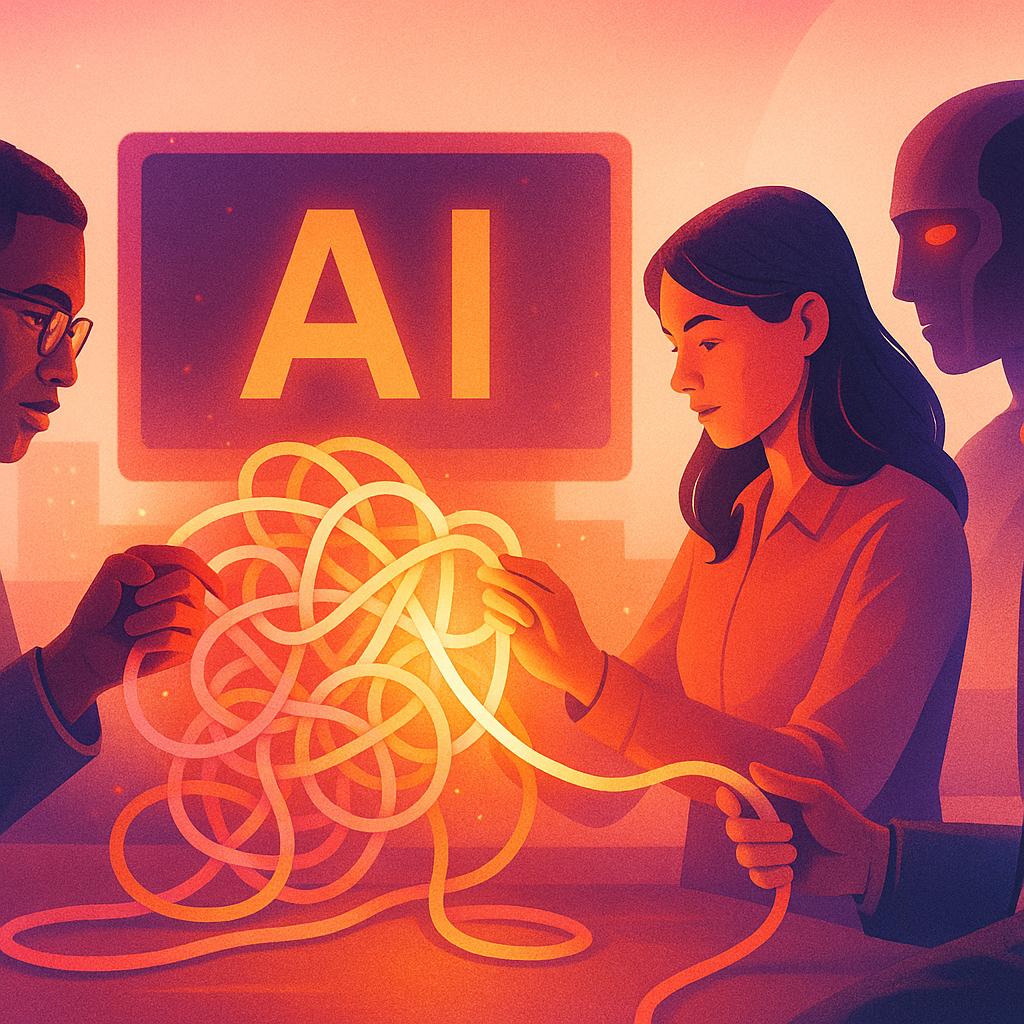



Where’s your job heading in the information whirlwind spinning wildly at the axis of artificial intelligence? No need for crystal balls or tarot decks. Let’s dissect the trajectories for researchers in this riveting age of AI. Innovation is not an ominous doom; it’s a door propped open, unveiling fresh vistas of possibilities, promising career paths tailor-made for thinkers and analysts.
Now, let’s paint the future with details.
First in our kaleidoscope is the Next Generation Insights Summit – a cornucopia of knowledge, technologies, and pioneering career explorations. One can’t help but note, the Summit’s opening volley proudly introduces ‘5 Career Paths for Researchers in the AI Era.’ The broad agenda, studded with ‘Deep Research’ sessions and insights into ‘synthetic personas,’ ‘autonomous moderation,’ and many more themes, lights the runway for your career take-off. It’s more than recommended to sign up and either take part live or watch the playbacks at a convenient time.
Understandably, absorbing a paradigm shift might be overwhelming; hence, the Summit complements its offerings with hands-on experiences in the form of webinars. One enlightening webinar is by Sago where they bring the focus on the ‘how-tos’ of DIY tools in corporate research or insight teams. Another webinar by Forsta in partnership with Insight Platforms provides guidance on planning and choosing research tech for your agency or team.
Now that we have established the landscape let’s scout the land and sift through possibilities.
If you closely examine the script, you will spot the nascent roles researchers can adapt to in the AI era.
The first path leads to becoming an AI Data Scientist. With an understanding of algorithms and data manipulation techniques, you could extract patterns, interpret raw data, and provide insights. A role that is indispensable in this era.
The next track beckons you to become a Machine Learning Engineer. As an engineer, you would be responsible for creating AI models, running various tests, and maintaining systems, providing invaluable help to companies.
Another potential progression could be into a Business Intelligence Developer. This role involves analyzing complex data sets to identify business and market trends. Essentially, you could be the guide, helping organizations understand the market, competitors, and business environment.
A fourth exciting avenue is becoming an AI Ethicist. When machines start making decisions, moral quandaries fly high. As an AI Ethicist, you would be grappling with these ethical questions, providing balanced and thoughtful perspectives on AI’s impact.
Lastly, you can don the hat of a Research Scientist. Here, you would be on the front lines of AI development, conducting comprehensive research on complex AI issues.
In this blinding pace of change, let’s remember, the crux of artificial intelligence is not putting humans out of work; instead, it’s about making work more humane and creating new opportunities. Innovation indeed creates more waves than it crashes. Harnessing AI’s potential does not mean forgetting human ingenuity; rather, it redefines roles, skills, and the future of work itself.
Here’s to emancipating the explorer within you and steering forward in this exhilarating journey, confidently towards a thrilling career in the AI era. The horizon looks promising, don’t you agree?