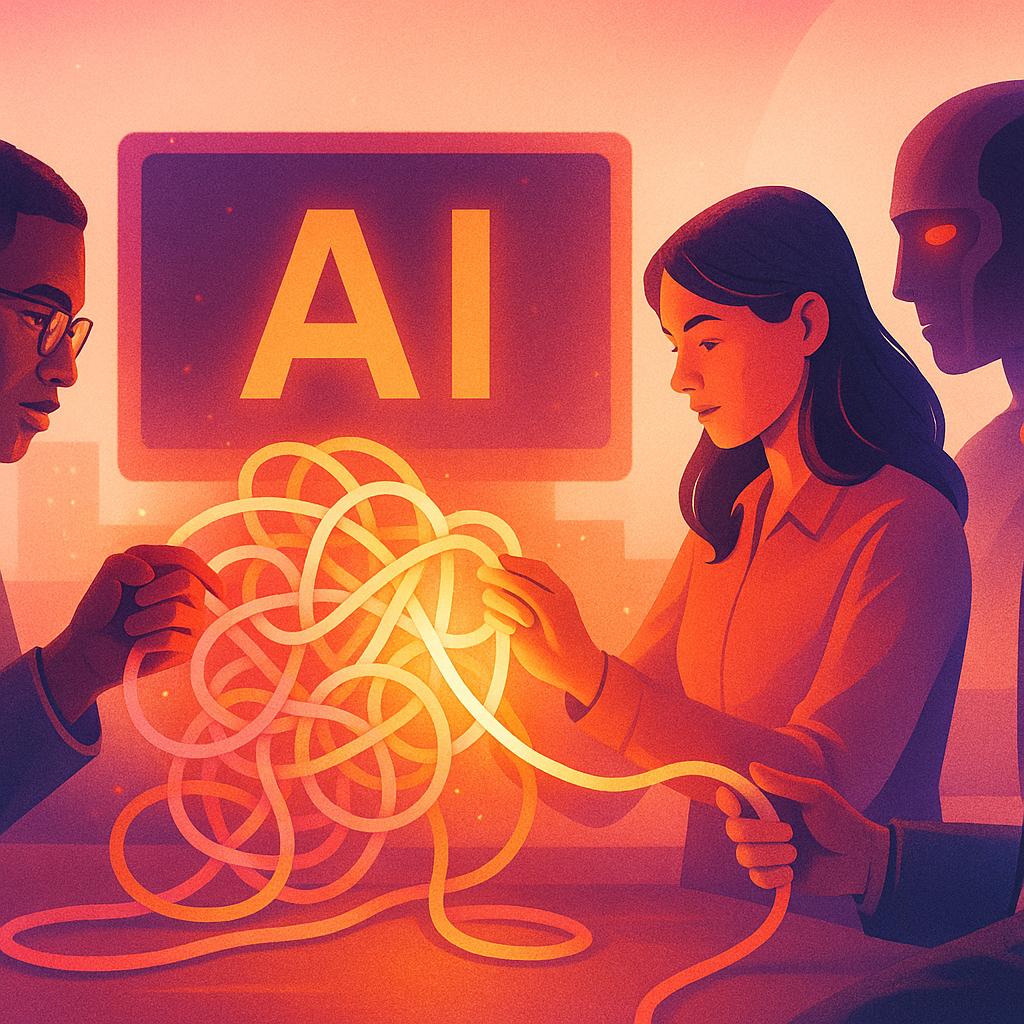



Hailed as the new gold in our digital era, tokens are quietly redefining the race to AI supremacy. From being auxiliary components of cryptosystems, tokens are taking center stage in the tech world, ostensibly shaping the business models of major tech companies and stirring the currents of Artificial Intelligence.
The story of Surge AI encapsulates this captivating trend. A data labeling startup founded in 2020, Surge’s rise is a testament to the power of token economics. Unlike its competitor Scale AI, which employs a workforce of nearly 250,000 contractors to process billions of annotations, Surge AI has embraced a radically different strategy.
Driven by quality and precision rather than sheer volume, Surge has outpaced market leader Scale. And they’ve done so with a lean team of just 116 employees. Quality over quantity rings true here; each token generated by Surge isn’t just valuable—it’s a product. Amid an increasingly competitive market that demands relevance, accuracy, and trust, Surge has not only surpassed Scale in revenue but also emerged as an innovation leader in the tech landscape.
But Scale isn’t the only tech giant grappling with the disruptive effects of the token economy. Meta’s high-profile deal, which saw scale’ CEO Alexandr Wang join Meta to lead a new AI division, has sparked the fracturing of partnerships with companies like Google, Microsoft, and OpenAI. It seems big enterprises are opting for lean, token-oriented services that align with their strategic goals in AI development. The token economy, in effect, has leveled the playing field for fresh and nimble startups to make their mark.
Silicon Valley titans like Google and Microsoft are already brushing shoulders with newcomer Coatue in the token economy, processing over 500 trillion tokens combined this year. Here, tokens aren’t just currency—they’re the atomic units of AI, functioning as the root source of revenue, the core logic of valuation, and the ultimate indicator of adoption.
In essence, the token economy is revolutionizing both the business and technical aspects of AI. On the one hand, it’s influencing how companies, both large and small, conduct business and generate profits. On the other, it’s recalibrating the technology that drives AI, enabling it to process vast amounts of data faster and more accurately.
Amid this upheaval, a key question arises: where does this leave us, the consumers? Well, the impact is twofold. An efficient token economy benefits us with better AI products and services, pushing forward the limits of what AI can achieve—from more personalized voice assistants to accurate predictions that can solve complex problems.
And there’s more. The token economy presents us, the users, with a unique opportunity to contribute—literally—to the AI world. Token models, like that of Surge AI, rely on curated experts to refine their AI models, a trend that’s likely to continue. So, while the tech giants and startups navigate this brave new world, we’re riding shotgun, shaping the advancement of AI itself.
As the tale of tokens, tech companies, and AI continues to unfold, one thing is certain: our interaction with technology is already changing, and the best part—we get to be a part of it. And remember, the next time you hear about tokens, think of them not as mere digital assets, but as the catalysts pushing AI to even greater heights.