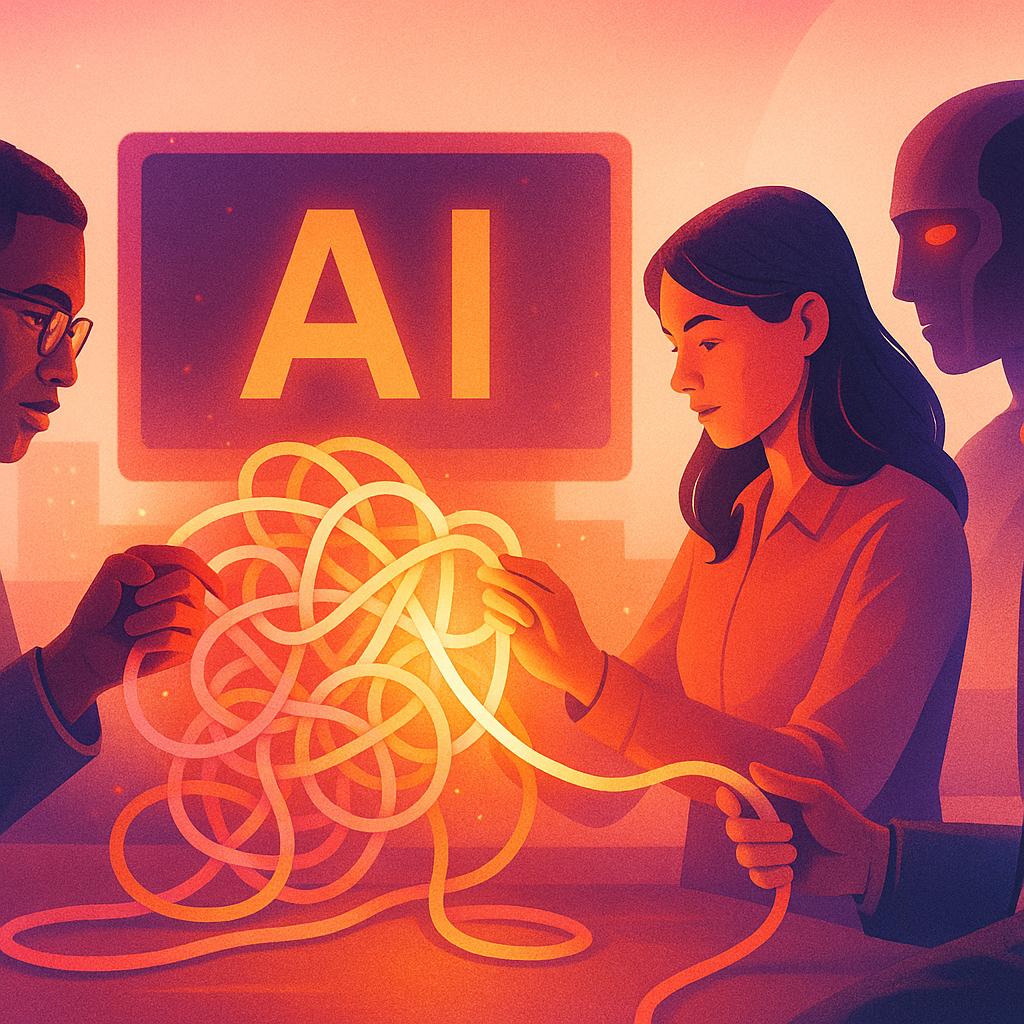



Welcome to the era of as we traverse the ever-evolving landscape of artificial intelligence (AI), a technology that continues to reshape our lives and society in unprecedented ways. As news breaks on the buzz surrounding Meta Platforms and their concerted efforts towards AI enhancement, the implications on legislation, corporate investment, and global consumer trends resonate across the board.
Defining the AI landscape for Meta is a team comprising two executives and a specialized group of 14 AI researchers. This elite ensemble from OpenAI, now integrating their talent at Meta, hints at an aggressive push towards AI innovation. With the amalgamation of multimodal AI, computational reasoning, and post-training techniques, Meta aims to bolster its large language models, thereby enhancing the functionality and intuitive learning of its AI systems.
The recent announcement of the formation of Meta Superintelligence Labs turns the spotlight on the market dynamics of AI talent. The immense financial commitment involved in such major moves orchestrates a ripple effect throughout the industry and beyond. Costing Meta millions in sign-on bonuses, it also translates into heavy equity compensation—reflecting the escalating worth and demand of AI expertise.
As Meta focuses on bolstering AI’s capability in reasoning and multimodality, we can see the potential for more articulate, nuanced language models and a richer interactive experience. This focus also opens doors for consumer-focused platforms like Instagram and WhatsApp to offer more sophisticated AI interactions, thereby boosting user engagement and enriching digital experiences.
But such seismic shifts in technology landscape don’t evolve in a vacuum. On the policy front, the U.S Senate’s recent decision to amend President Trump’s “Big Beautiful Bill” – that aimed to block state regulation on AI – plays a compelling role in the narrative. This move highlights the tension between simplification of AI regulation, protection of public interest, and the balance-of-power across federal and state jurisdictions.
Meanwhile, AI continues to attract significant investments with AI startups like xAI, Genesis AI, and Empire AI, just to name a few, garnering billion-dollar rounds from both private and state sources. This surge in investment echoes the market’s confidence in AI’s potential to power our future.
Moving from organizational to daily user applications, Meta looks to seize the opportunity to bring AI-powered experiences to billions of users on its platforms. An evolution that could see users interacting with an AI voice assistant in a super-personalized way, enhancing the overall user experience significantly.
AI’s transformative potency is also being acknowledged beyond the corporate sphere. In a heartening move, over 60 organizations, including OpenAI and Google, have committed to nurturing the future generation of AI enthusiasts—pledging to provide resources for AI learning in K-12 education.
All roads lead to a future where AI is not just a technology trend but a key driver of societal growth, and a crucial tool in navigating the labyrinth of challenges, solutions, and opportunities in our interconnected world. As AI continues to reshape business landscapes, policy realms and consumer trends, we anticipate a future where embracing the AI revolution is no longer an option but an imperative.