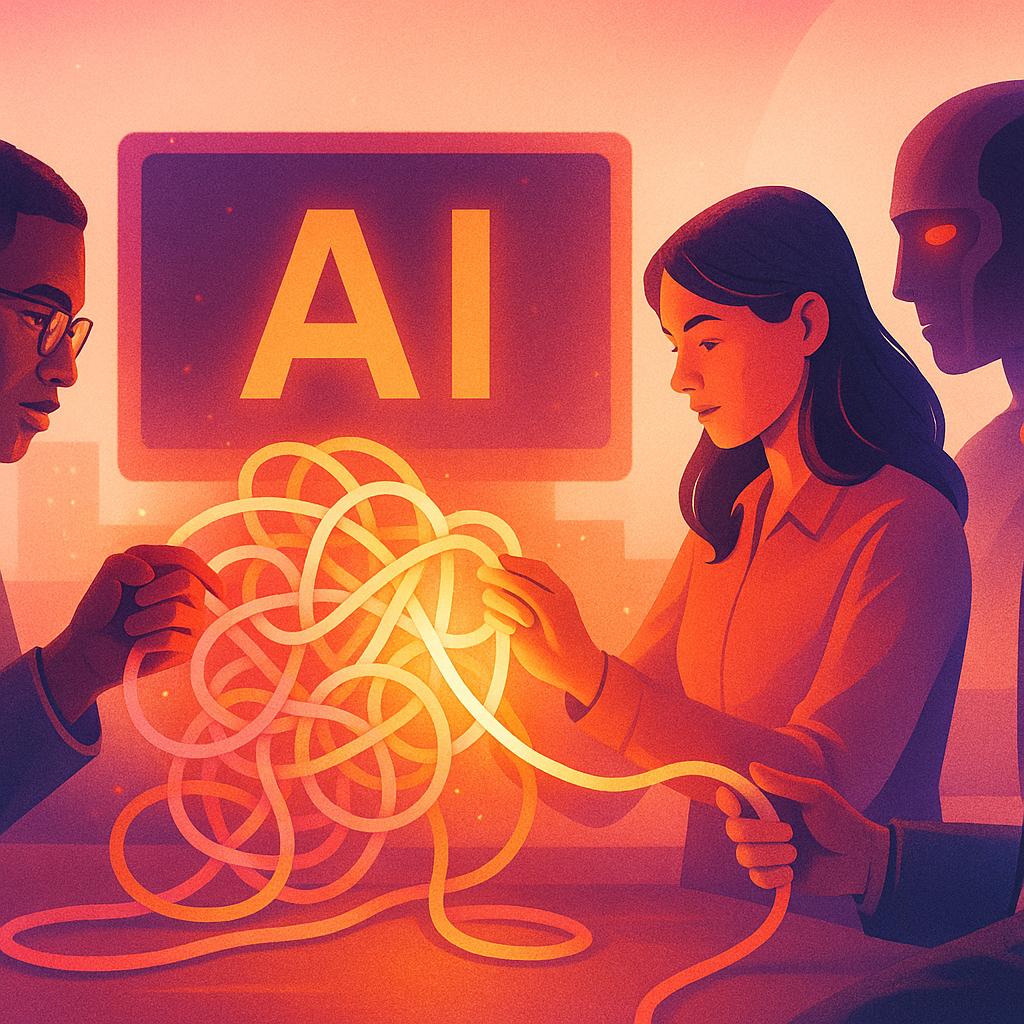



Fidji Simo’s appointment as the CEO of OpenAI’s Applications has undoubtedly made waves within the AI industry. Simo, with her impressive pedigree as the former CEO of Instacart and time spent on the OpenAI board, brings an exciting mix of industry insight, experience, and vision to her new role. As we follow her journey on this new path, we are eager to see how she will gear up to tackle the unique challenges and opportunities that define the future of artificial intelligence, driven by OpenAI.
OpenAI, with its commitment to creating and promoting friendly AI that benefits humanity, is not just at the forefront of AI developments, but is also steering the way we understand, use, and build AI systems. Recently, an interesting shift has been taking place in the AI research space. Traditional training methods for large language models have been showing slower improvements, prompting researchers to turn to reinforcement learning.
Reinforcement learning, as the name suggests, involves rewarding a model for achieving specific goals while reprimanding it for undesirable behaviors. It is similar to training a pet dog: good behavior is rewarded with a treat, and bad behavior is met with a stern “NO”. AI models, in this case, are essentially taught what a ‘good response’ or the ‘right answer’ looks like.
While teams of human experts can evaluate and offer feedback on these models’ outputs, it’s also possible to provide examples of problematic questions and answers. These could be from various fields such as biology, medicine, or software engineering. However, the reinforcement learning model isn’t without its challenges.
Despite its effectiveness in fields like mathematics, where answers are mostly binary – right or wrong, using it in fields with multiple correct answers complicates the training procedure. A 3-D Tetris game developed by an AI model is the perfect example. Researchers in such cases prefer offering feedback during the working process.
Additionally, many AI labs are setting up “gyms” to train their AI models. These digital gymnasiums are replicas of applications such as Salesforce, DoorDash, and Amazon, where AI models can learn to complete various tasks with minimal human intervention. Moreover, researchers note that as these models learn to navigate one app, it concurrently equips them to figure out how to maneuver through other similar applications or websites.
However, despite the apparent advancements and opportunities offered by reinforcement learning coupled with these digital gyms, it’s essential to acknowledge they come with their set of complexities — they’re computationally expensive and require substantial setup efforts. For now, reinforcement learning typically kicks in once the model has undergone a process of pretraining.
This next phase in AI development has the industry buzzing with excitement. One such exciting development is the appointment of Fidji Simo as CEO of OpenAI’s Applications. Simo’s new role has us all eager. With a broad remit covering areas such as product, sales, finance, and an ambition to grow OpenAI’s consumer and enterprise businesses, we’ll watch with keen interest as she works to stabilize the talent pipeline and improve profit margins amid the ongoing AI talent war.
For businesses and industries beyond the AI hemisphere, these developments may signal changes in how they approach AI applications. As AI becomes more sophisticated, efficient, and
real-world-applicable, companies will need to consider how they can leverage these cutting-edge advancements. The appointment of Simo to lead OpenAI’s Applications is exciting not only for what she might achieve within OpenAI but also for the potential ripple effects and advancements her work could catalyze across industries and sectors. So, it’s clear that AI, along with its leaders, will continue to play a pivotal role in defining not just the future of technology, but also the future of humanity itself.